
 The principle force behind UChicago’s many seminal contributions to the field of agricultural economics was T.W. Schultz, a South Dakota farm boy who almost didn’t attend college, but ultimately earned a Nobel Prize for his research on transforming traditional agriculture, and on investing in workers’ education.
Schultz grasped the connection between agriculture and farming and the rest of the economy. He and several of UChicago’s talented students and colleagues worked to understand how the fundamental forces of supply and demand, productivity, and innovation played out on farms in the US and abroad.
They developed methods and tools to calculate the demand for commodities; how farmers forecast prices and determined supply; and why farmers adopted hybrid corn, a new technology in the 1930s. They showed how government policies intended to support farmers, along with stabilizing prices, worked best when those policies aligned with market forces.
Schultz saw clearly that poverty was too often connected to farming and was among the first to see economic development as a problem related directly to agriculture.
Agriculture also offered fertile ground for Schultz’s ideas on the economics of investing in human capital—knowledge, skills, and competencies as economically valuable inputs. He showed that education and knowledge could explain differences in economic performance and were key to improved productivity.
Following the Facts: The Great Oleomargarine Controversy
At Iowa State University, T.W. Schultz published a pamphlet in early 1943 that challenged long-held views. Pamphlet No. 5, “Putting Dairying on a Wartime Footing,” recommended substituting vegetable fats in the diet because animal fats were more labor intensive.
To Midwestern dairy farmers, this was heresy. The National Dairymen’s Association soon ran a full-page ad in the Des Moines Register to attack Shultz and O.H. Brownlee, a graduate student and the author of the manuscript, disputing the publication’s conclusion that margarine was as nutritious as butter.
A bitter battle over academic freedom ensued. Schultz called it “a crisis in the development of the social sciences on this campus.” Iowa State University President Charles E. Friley found himself confronted with faculty demanding that scholars’ analysis should be protected from external “pressure groups,” while balancing the university’s extension role and relationship with industry and farmers it served.
A committee was convened and it was decided to rewrite the pamphlet. Schultz wasn’t having it. In his view, any compromise to satisfy special interests meant that the university was not serving its greater responsibilities to the broader general public. He resigned in September 1943 and left Iowa State for Chicago, taking D. Gale Johnson, top-flight home economist Margaret Reid (see nearby Panel in the Chicago School exhibit), plus A.G. Hart, and the pamphlet author Brownlee with him.
In an ironic postscript, when Schultz won the Nobel Prize, the media tracked him down while he was preparing to give a lecture—at Iowa State University. He was there to speak at the invitation of a former student, Wallace Huffman, PhD ’72, who recalls that Schultz’s Nobel news conference was hosted by the president of the university he’d left 36 years earlier in a staunch showing of intellectual integrity. The Iowa State Economics Department maintains a display highlighting the 1943 Oleomargarine-Butter Controversy to this day, according to Huffman.

Policy and Prices
Following the Great Depression, policymakers often argued about whether rural America was getting too much or too little attention from Washington, as opposed to the industrial sector. Schultz, who had studied the instability of commodity prices and the role of uncertainty in farmers’ decisions, focused instead on the relationship between the two sectors. In a major early work, Agriculture in an Unstable Economy (1945), Schultz sidestepped debates about which policies favored agriculture or industry and argued that it was the link between the agricultural and industrial sectors that mattered, within a larger context of world trade.
His policy suggestions included education to improve farming practices and to encourage mobility among rural youth, crop insurance and better storage systems for grains and feed, the avoidance of Depression-era production plans, and the establishment of forward prices. For Schultz, prices were not the goal of policy; rather, prices were a means to efficient allocation.
Valuing Human Knowledge
In a mid-century period when much economic study focused on industrialization and technology, T.W. Schultz focused on the economic value of investing in people. He viewed farmers as knowledgeable economic agents making smart decisions. “[M]ost observers overrate the economic importance of land and greatly underrate the importance of the quality of human agents,” Schultz wrote in his Nobel Prize biography.1 Schultz believed better information and knowledge could lead to better decisions, and he began to quantify how training and education affected the efficiency of farmers.
Marc Nerlove’s (see Item 5, “Cobwebs and Prices”) history of agriculture economics postulates that Schultz’s work in Germany after World War II led him to notice that Germany and Japan recovered economically much faster than England and other European nations. Schultz identified the people of these nations as the source of their economic resurrection. Germany and Japan went into the war with healthier, more educated populations, which helped them recover faster.
In 1958, he published his landmark article, “The Emerging Economic Scene and its Relation to High School Education,” in which he was the first to write about the connections between education and productivity. He explained that increased national output was the result of investment in human capital, and he demonstrated a direct link between human capital and increased earnings.
With his presidential address to the American Economic Association in 1961, Schultz brought the concept of human capital to the forefront of economic research. He argued that people deliberately invest in human capital, which grows at faster rates than other forms of investments, and it is a major contributor to economic growth.
1 Theodore W. Schultz – Prize Lecture: The Economics of Being Poor”. Nobelprize.org. Nobel Media AB 2014. Web. 21 Apr 2017.
Focusing on Development
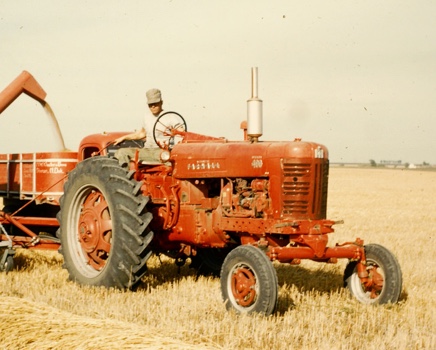
From his own early years and his first-hand observations of farming in the new Soviet Union from a 1929 trip, T.W. Schultz saw links between farming, poverty, and economic growth in developing nations.
In the traditional view of this time, the normal rules and theories of economics did not apply in poor countries. It was thought that cultural and structural obstacles and reliance on primary commodities made these economies “different.” Farmers were seen as unresponsive to normal economic incentives.
In what some see as his greatest contribution, Schultz challenged and reversed that view with his book Transforming Traditional Agriculture (1964). He demonstrated that farmers in developing countries, regardless of their education level, are rational people who eschew risky, untested, unsuitable “improvements” but are willing to accept logical, potentially profitable innovations.
“His main view was that man everywhere is economic and, left alone, tends to be efficient,” recalled Finis Welch, PhD’66. This view was rooted in Schultz’s direct observations and synthesis of research on poor but efficient farmers around the world. Their ability to capitalize on innovations proved true in the 1960s and 1970s when such farmers planted new strains of grains and rice that maximized their returns.
Scion and Scientist: D. Gale Johnson

Like T.W. Schultz, D. Gale Johnson grew upon a Midwestern farm and went on to make major contributions to our understanding of agricultural markets. Also like Schultz, who was his mentor, Johnson worked on important policy issues in both agricultural economics and development economics, including the impact of price instability on the efficiency of resource allocation and use in agriculture—a key concern in the turbulence of the Depression.
In Forward Prices for Agriculture, “[D. Gale Johnson] showed for the first time how farmers form expectations to guide production decisions, how these expectations contribute to instability in agricultural commodity markets, and how agricultural commodity policies could be designed to address these problems.”1
Johnson studied agriculture in the Soviet Union for decades and extended his interest to Eastern Europe, becoming a sharp critic of the failings of centrally planned economies. His interest in population growth rates that put pressure on the world food supply led Johnson to analyze agriculture policy in the People’s Republic of China. He carefully documented damaging collectivization policies and waves of reform that ultimately led to a huge transformation and liberalization of Chinese agriculture.
1 “D. Gale Johnson.” National Academy of Sciences. 2005. Biographical Memoirs: Volume 86, p. 223. Washington, DC: The National Academies Press.
Tool Builders and Policymakers
Two other UChicago contributors to agricultural economics were Zvi Griliches and George Tolley. Griliches joined the faculty after earning his PhD at UChicago in 1957. His work was among the first to treat the development and diffusion of new technology as an economic phenomenon. Furthermore, by studying expenditures on hybrid corn research and social returns on corn production, Griliches once showed that there are returns of at least 700 percent earned for every dollar invested in hybrid corn research.
Griliches taught applied microeconomics courses using agricultural examples, and his most lasting contribution to economics was building usable research tools. “I started in agricultural economics, a field that took both data and econometrics seriously, and used it to attack substantive problems. Econometrics was a tool, not an end in itself, and this became also my attitude to it,” he wrote in 1998.1
One approach Griliches deployed was the concept of hedonic pricing – the method of estimating demand for, or value of, a product by summing up the value of all the characteristics that make up the product. This proved useful in creating price indexes, among other uses. Griliches won the John Bates Clark Medal, a prestigious award for outstanding young economists, in 1965, and went on to serve as president of the American Economic Association.
George Tolley, PhD ’55, studied agriculture policy in relation to migration as well as international trade, water and resource allocation, and other environmental issues. After a decade on the faculty at North Carolina State, he returned to the UChicago faculty, while serving in public policy roles. He also directed the Economic Development Division of the US Department of Agriculture Economic Research Service from 1965–66. In 1974–75, he served as deputy assistant secretary and director of the US Department of Treasury Office of Tax Analysis.
Tolley’s research has focused on issues ranging from the local farm to the nation and the world, including water allocation and water investments in depressed areas, to tax rates and national incomes, to international trade and economic development. He has also investigated issues relating to water allocation, road capacity, suburbanization and rural–urban balance, and the resource allocation effects of environmental policies. Tolley influenced many students, supervising 70 dissertations in his many years on the faculty at UChicago
1 Griliches, Zvi. 1998. Practicing econometrics: Essays in method and application. Economists of the Twentieth Century, eds. M. Blaug and D. Colander. Cheltenham, UK, Edward Elgar Publishing.
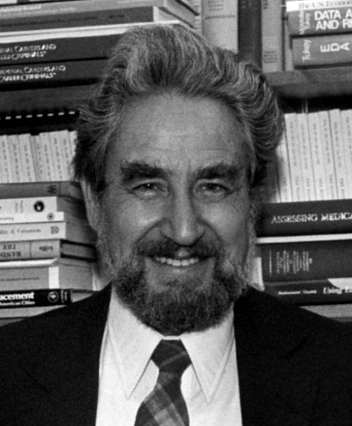
Photo Credit: Harvard University

Cobwebs and Prices
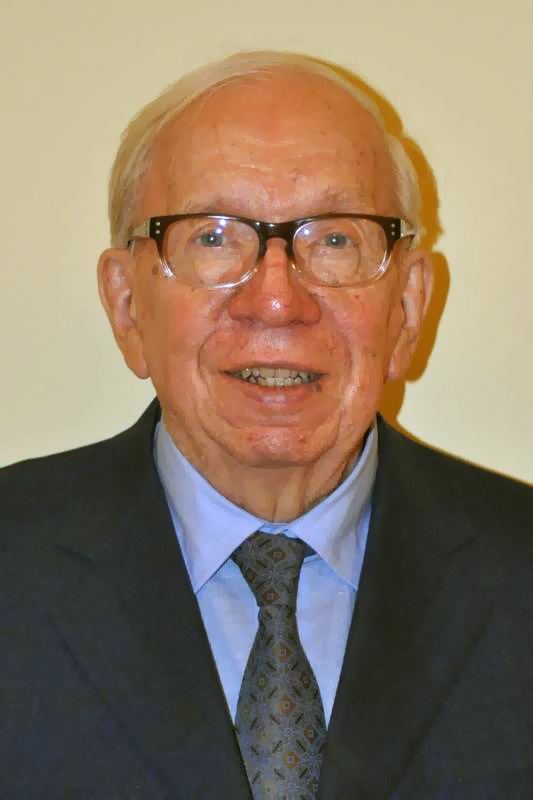
Marc Nerlove, BA ’53, who earned his master’s and doctorate at Johns Hopkins University, wrote his doctoral thesis in Chicago, where it was refined in Arnold Harberger’s public finance workshop. His thesis estimated elasticities of supply for corn, cotton, and wheat, and was instrumental in earning Nerlove the 1969 John Bates Clark Medal.
In an early and important paper, “Adaptive Expectations and Cobweb Phenomena,” Nerlove expanded upon the cobweb model, which explains cyclical fluctuations in supply and prices in markets like farm commodities, where decisions must be made before prices are observed. First documented in hog markets in the 1930s, the cobweb theory explains how high prices would lead farmers to raise a large number of hogs; when they took the hogs to market 18 months later, supply would exceed demand and prices would drop. Then the cycle would reverse, with low prices leading to a shortage and high prices. When graphed, the resulting spiral of fluctuating prices and quantities looked like a cobweb.
Nerlove introduced the notion of adaptive (or backward-looking) expectations and farmers’ partial adjustment to price changes into the cobweb model. Applying this to study agricultural supply response, Nerlove showed that farmers were indeed responsive to prices.
Achieving Global Impact
 Schultz and his colleagues expanded UChicago’s research across the world. Among other issues, their work examined the efficient use of human capital in agriculture and helped address underemployment and poverty. For example, Schultz’s insights into the willingness of poor farmers in developing countries to adopt new techniques and seed varieties laid the intellectual groundwork for the “Green Revolution” of the 1960s.
In 1948, Schultz won funding from the Rockefeller Foundation to support a multidisciplinary effort that led to important field work in South America, the Soviet Union, China, India, and elsewhere. During this time, Schultz and his colleagues also established agricultural economics programs at other schools in Israel, Latin America, and Asia.
D. Gale Johnson and Schultz met Justin Yifu Lin, PhD’86, during a visit to Peking University in the fall of 1980 and offered him a scholarship in 1982. Lin returned to China in 1987 and set up the China Center for Economic Research at Peking University, which became an influential institution in economic education and policy research in China. Johnson spent much time there in his later years.
NPA Committee of the South
T.W. Schultz, the Chair of the Agriculture Committee of the National Planning Association, formed this group to study how technology might transform the agricultural sector and, as implied in the images on the cover, address some of the socioeconomic imbalances in the Cotton South.
T.W. Schultz Papers, Regenstein Library Special Collections.

Enduring Influence
While they made vital contributions to agricultural economics and trained many who went on to advance the field, T.W. Schultz and D. Gale Johnson also made an indelible impact on what became internationally recognized as Chicago Economics.
Coming from Iowa State where the extension system emphasized collective feedback, Schultz and Johnson also helped solidify the tradition of Chicago’s uniquely rigorous workshops that refined research through critical cross-examination. With sharp questioning that refined research, the workshops became a key component to the culture of economic inquiry at UChicago.
For UChicago agricultural economists, understanding prices through the lens of supply and demand was essential to evaluating price supports and related farm policies. These scholars changed our understanding of the economics of farming, including effective policymaking and approaches to fighting poverty. Their quantitative, analytical approach brought a rigor to agricultural economics that resonated far beyond UChicago. The tools, methods, and ideas developed on their watch changed economics itself.


